One bank statement, read end to end
February 2026, Bank of America, 74 transactions, merchant anonymised. Below are the four pages of an MCA underwriting report as they come out, with the figure each page produces and how it was derived.
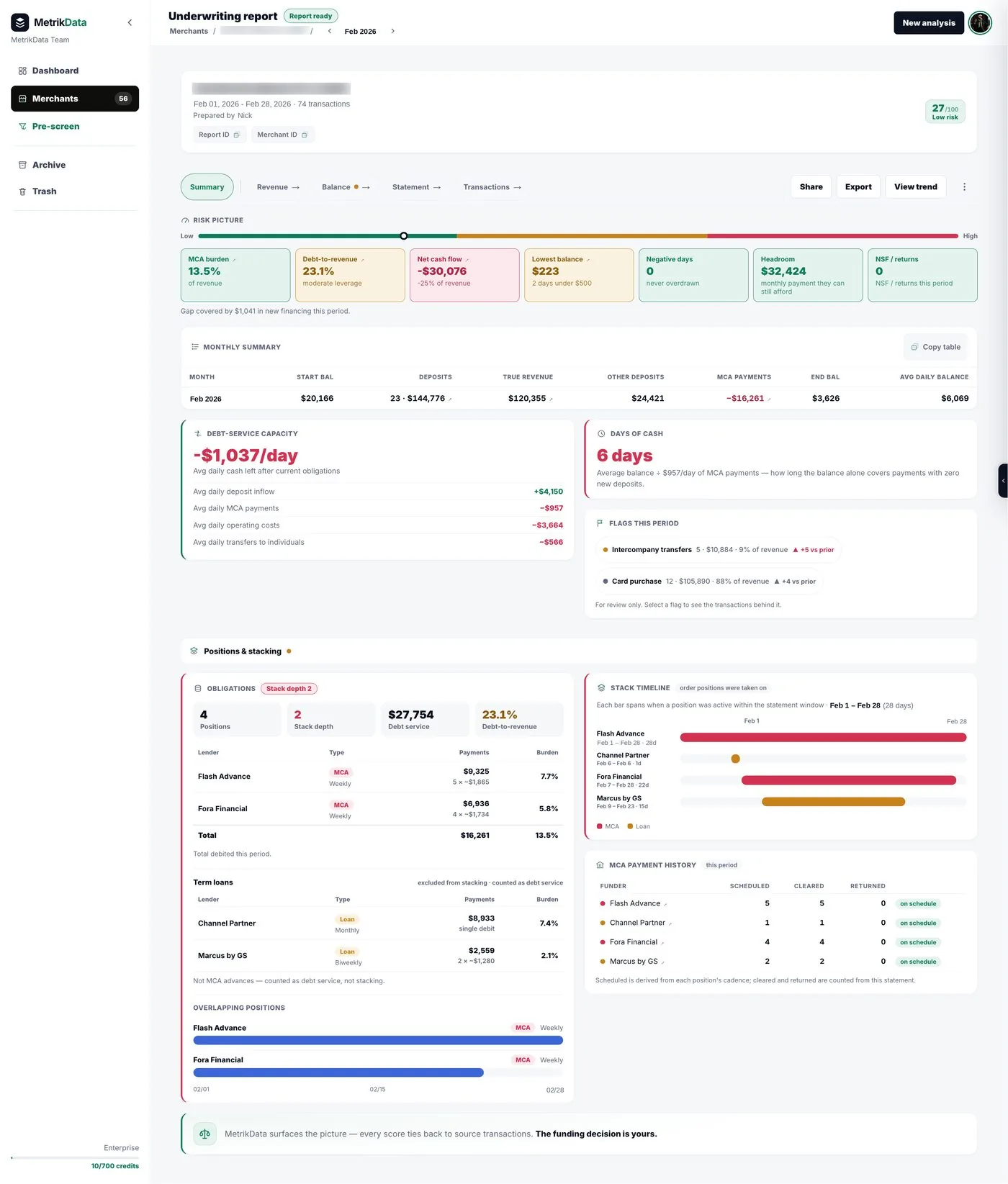
MCA burden, debt-to-revenue and cash flow on one screen
This merchant carries an MCA burden of 13.5% and debt-to-revenue of 23.1%. Net cash flow for the month came to −$30,076. The lowest close was $223, with no days below zero and no NSF activity.
Under those figures sits the monthly roll-up, the daily cash left after obligations, four funding positions with cadence and burden for each, the order the merchant took them on, and scheduled payments against cleared ones.
No approve or decline anywhere on the page. You read the numbers and make the call.
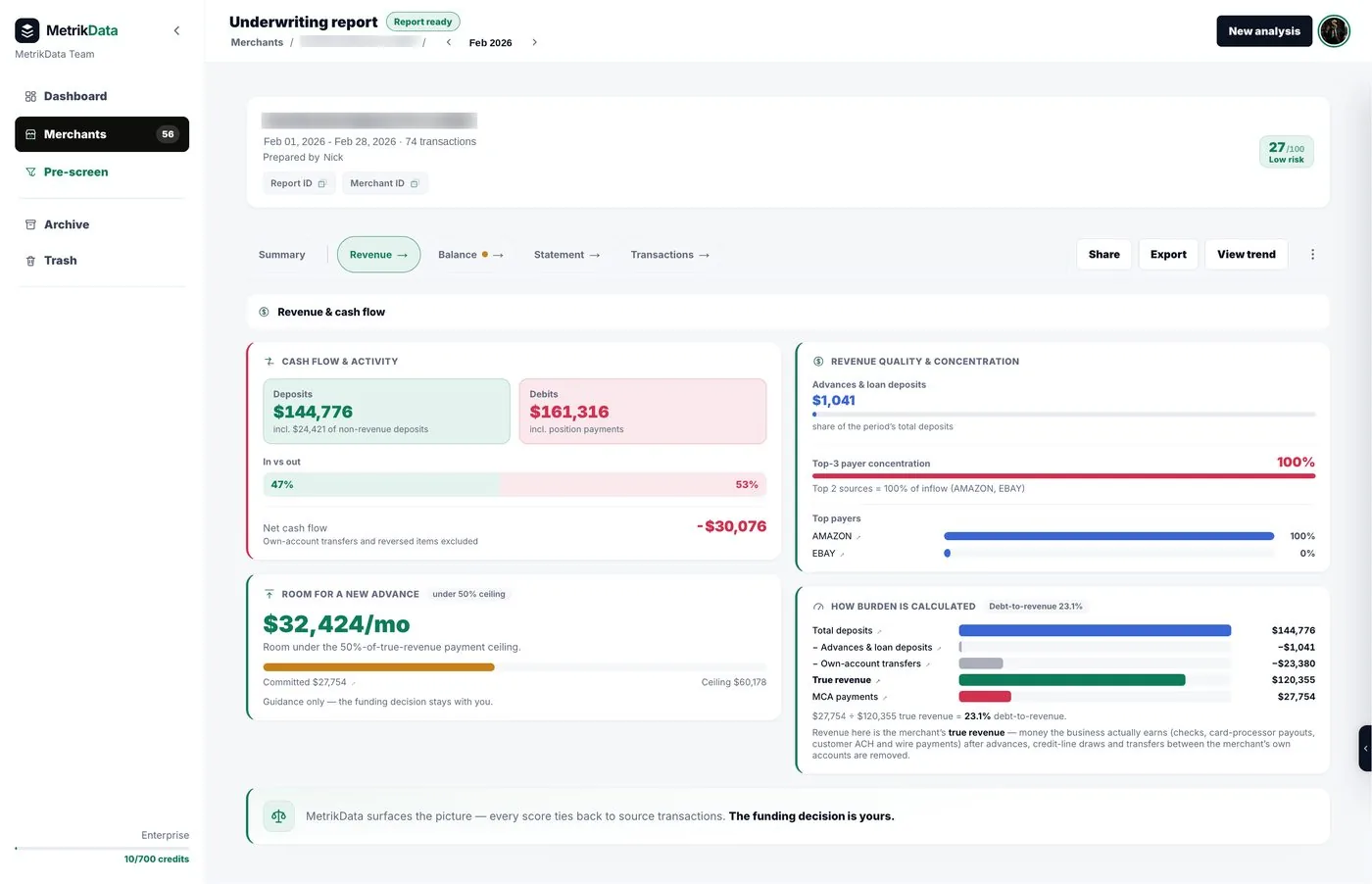
True revenue, not gross deposits
Deposits totalled $144,776. Of that, $1,041 arrived as advance proceeds and $23,380 moved in from the merchant's own accounts. Neither is trade. True revenue for February was $120,355.
Position payments of $27,754 work out to 23.1% of true revenue. Divide the same payments by gross deposits and you get 19.2%, which is how a stacked merchant reads as moderately loaded.
The page also shows payer concentration, where two sources account for the entire inflow, and the room left under a 50%-of-true-revenue payment ceiling.
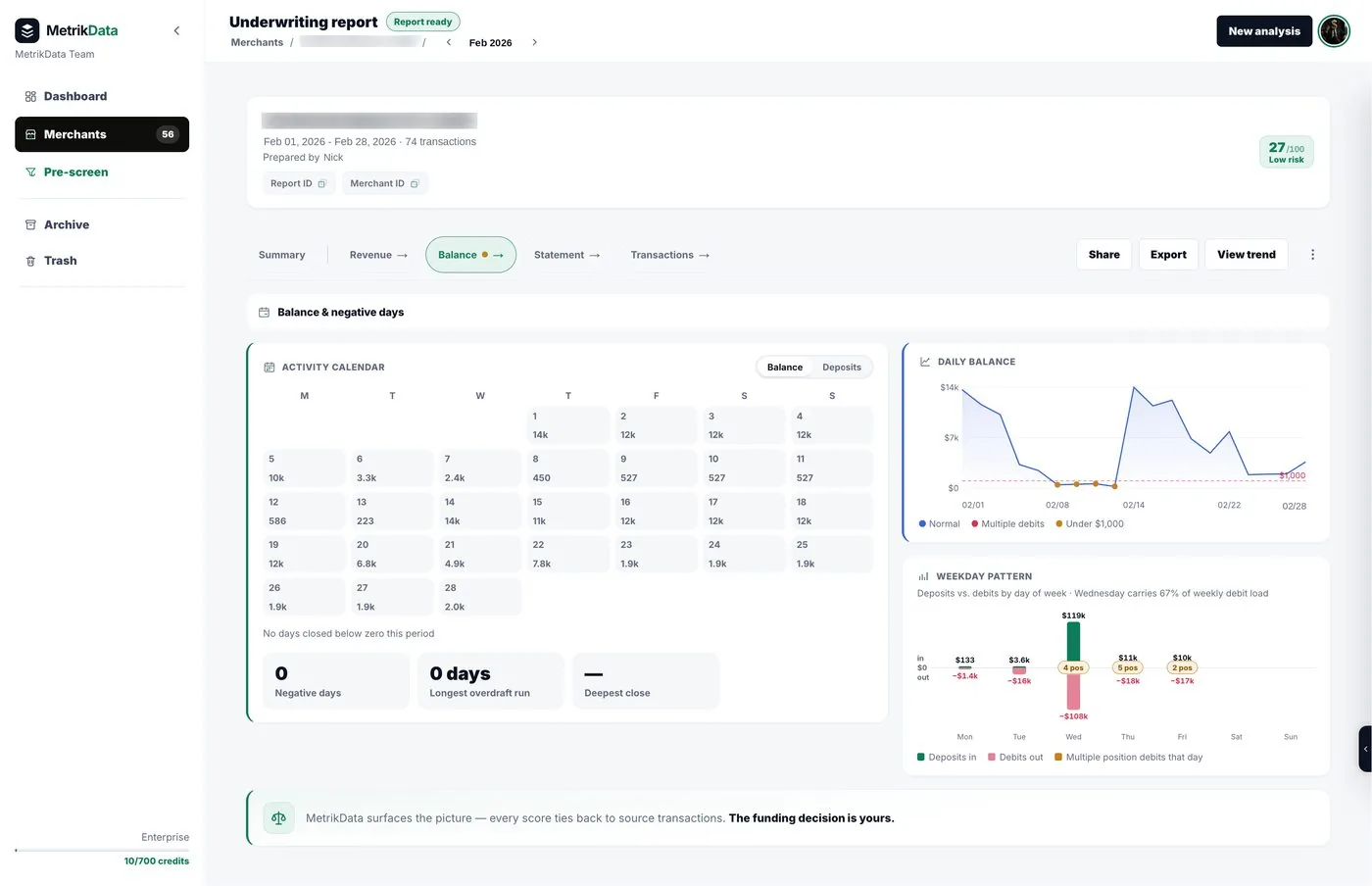
Daily balances, low days and the weekday debit pattern
A calendar of closing balances sits next to the daily balance line and a breakdown of deposits against debits by weekday.
Two days closed under $500 and the lowest close was $223, yet the account never went negative. Wednesday carries 67% of the weekly debit load, which is when three of the four positions draw.
Switch the calendar to Deposits and the gaps in trade show up on their own, without reading a single transaction line.
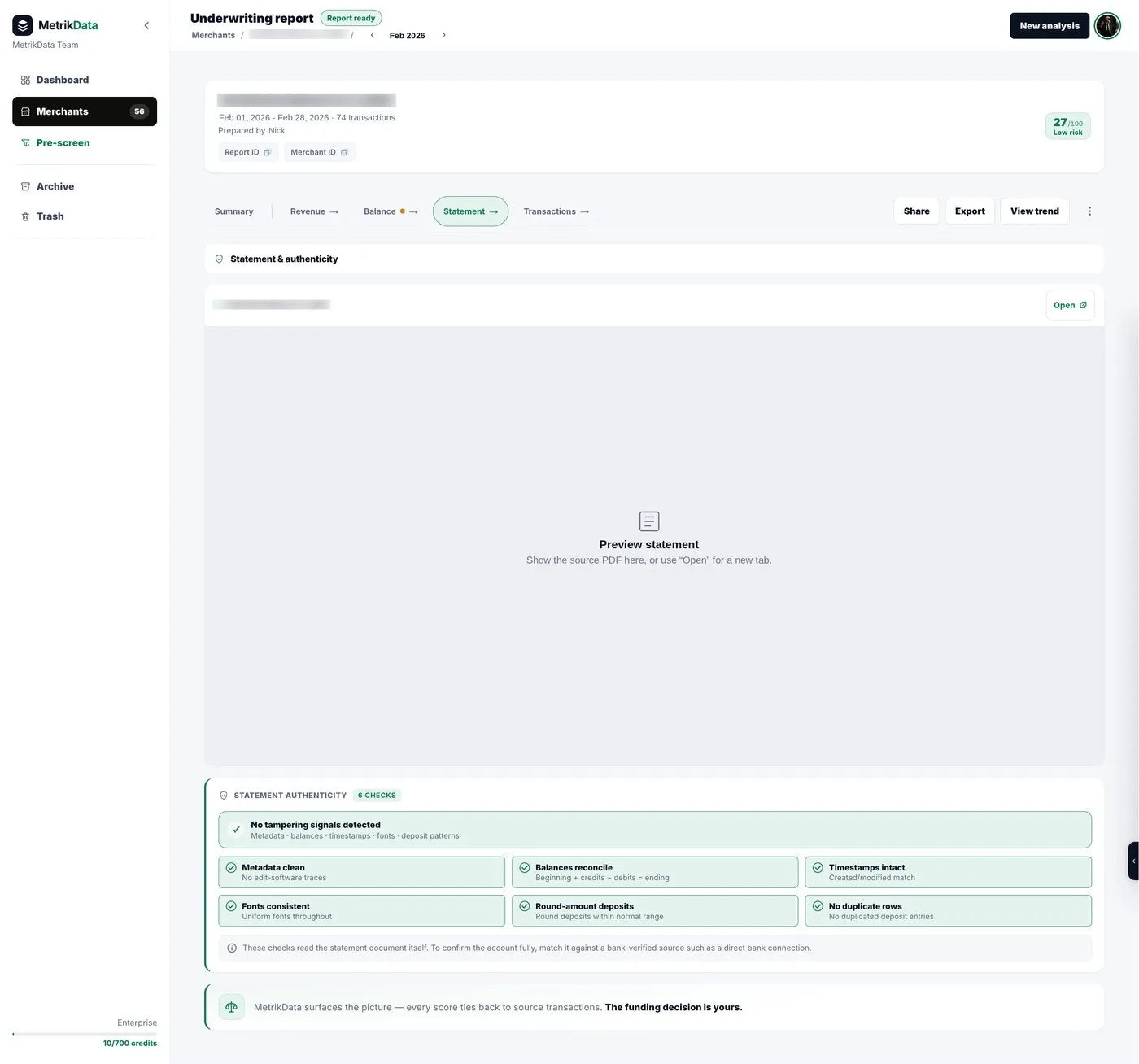
Six checks on the statement document itself
Metadata, balance chain, timestamps, fonts, round-amount deposits and duplicate rows. The checks are deterministic, so the same file returns the same result every time you run it.
They read the document, not the bank account. To confirm the account, match the statement against a bank-verified source such as a direct bank connection.
Every figure in the report stays tied to the transaction rows behind it, so any number can be traced back to its source.
MetrikData surfaces the picture. The funding decision is yours.
No approve or decline, no owner names in the report, no score standing in for a judgement. You get the numbers, the transactions behind them, and room to disagree with any of it.